
The Deceived Wisdom: The classic Stradivarius violin has a unique sound that justifies the reverence with which these instruments are held and the million-pound price tags. That’s as may be, but scientific analysis of Stradivarius violins reveals there was actually no secret sauce in the wood nor the varnish used by the luthier ClassicFM’s Tim Lihoreau refers to as the Cremonese Creator. Indeed, repeated blind tests with expert listeners and virtuoso players has shown that they really cannot distinguish between the absolute top-quality modern instrument and a classic Strad.
Read more […]
All posts by David Bradley
Dark matter – Missing you already
It’s a moot point that perhaps only one of Einstein’s papers went through the modern scientific peer review process and I often wonder whether an email received from him today suggesting that he’s overturned Newton’s work with talk of warped space-time and wormholes wouldn’t simply fail at the first or second step of my ”Fraudulent Invention Debunkifier” flowchart mentioned around this time last year on the Pivot Points column.
Read more […]
Read more […]

Picking a perfect password
We all worry about passwords although some people are at the ”all-for-one and one-for-all” end of the spectrum where a pet’s name or even ”password1” is fine and others use only unique, multiple complex, randomized alphanumeric strings with mixed case character sets and symbols. Either way, your password can be cracked.
Read more […]
Read more […]
Cloudy thinking on light therapy
The winter blues are commonplace (allegedly). Most of us in Northern climes have dull days when we’d like to float a little longer in the dreamy cloud of a warm duvet rather than tackle the cold, hard-edges of cloud computing and the day job. Limited exposure to sunlight and the feelings of lethargy it brings have even been medicalized in the form of Seasonal Affective Disorder, SAD, a rather too convenient acronym, to my mind. However, there are studies that show that the so-called ”winter blues” are actually more common in summer or moreover, that there is no seasonal pattern to misery and depression at all. That hasn’t stopped a whole industry emerging from this ”illness” selling light as a therapy.
Read more […]
Read more […]
Food chemistry or food culture
As the last remnants of holiday dinners, lunches, high-teas, suppers and celebratory breakfasts are collated and one last binge with myriad mixed flavors indulged, thoughts turn to taste. Specifically flavor and the combinations thereof. We all know that celebrity chefs are gluttons for an odd mix: sweet and sour is nothing to the TV cook who garnishes peppered okra with crème Anglaise washed down with a curried champagne spritzer with a hint of flint. And there are those who wouldn’t think of leaving the supermarket without a good selection of cheese and wine.
Read more […]
Read more […]
Looking forward to Christmas
In the West, it’s relatively easy to get caught up in the euphoria of Christmas, isn’t it? Regardless of one’s beliefs in the origins of the Universe and humanity’s place in it, countless millions of us succumb to the fake snow and the artificial sentimentality. The twinkling lights, the shops full cotton polymer resin reindeer, the children’s (and adult toys), chocolate goodies, the interminable loops of festive songs on the radio, the TV shows you just know were recorded in July but have jolly tinsel and baubles nevertheless. Then there are the parties, the lunchtime ”Christmas” drinks, Secret Santa, the bustling shopping centres, the ubiquitous sound of a Jingle Bells sample in every muzak track. Oh isn’t it all so wonderful?
Read more […]
Read more […]
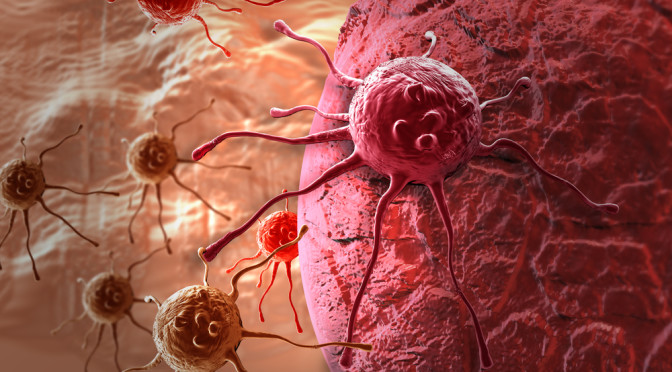
The Big C
Cancer. All around. But, is there an epidemic? The statistics would suggest not…for some forms of the disease, at least. Others are on the increase especially as populations age and more and more people survive the infections and altercations of youth, cancers of old age do seem to be more prominent in our lives.
Read more […]
Read more […]

A chemical Christmas
The Christmas meal in Britain usually centers on turkey, in Denmark roast pork. The French penchant is for goose, while Germans may opt for suckling pig. Regardless of the fleshy focus, a feast of culinary chemistry is at play when you prepare and cook the big meal. However, if you don’t get the chemistry right there’s more to worry about than dry meat and vegetables when the microbiology is dished up.
Read more […]
Read more […]

Interview with Lucy Marcus – Blue skies research
Lucy Marcus is Founder and CEO of Marcus Venture Consulting, Ltd, a company that endeavours to foster sustainable success for funding organisations. She is non-executive chair of the Mobius Life Sciences Fund and chair of the audit committee for BioCity Nottingham. She talked to David Bradley about the downside to science spending cuts in the UK.
Read more […]
Read more […]
Why scientists are waiting for Web 3.0
The Web in the 1990s, Web 1.0 you might call it, was all about content as everyone from shopkeepers to spectroscopists scrabbled to get online. The major scientific journals began their slow but steady adoption of the new access tools and community sites like ChemWeb and BioMedNet sprang up, endlessly mashing together capitalised prefixes and suffixes.
Read more […]
Read more […]